
Last updated November 23, 2026
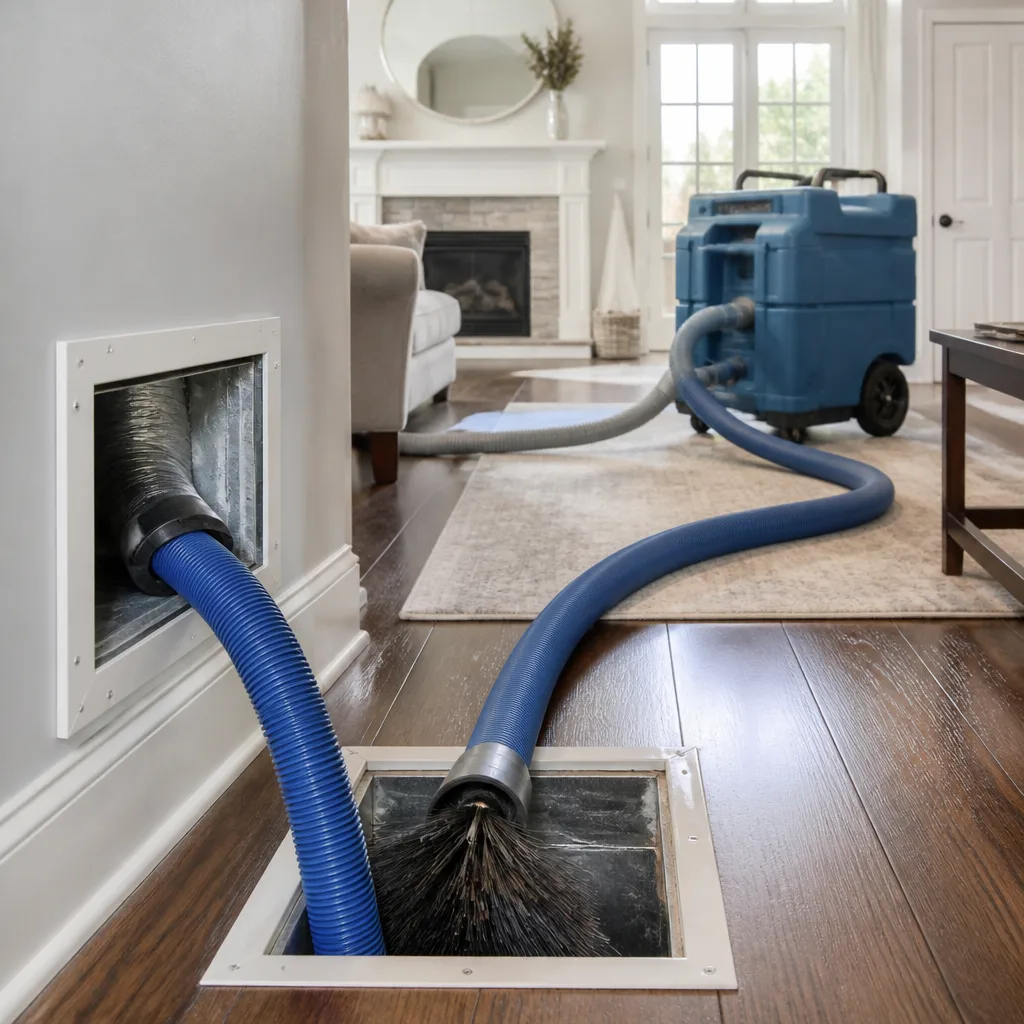 Whole-home duct cleaning
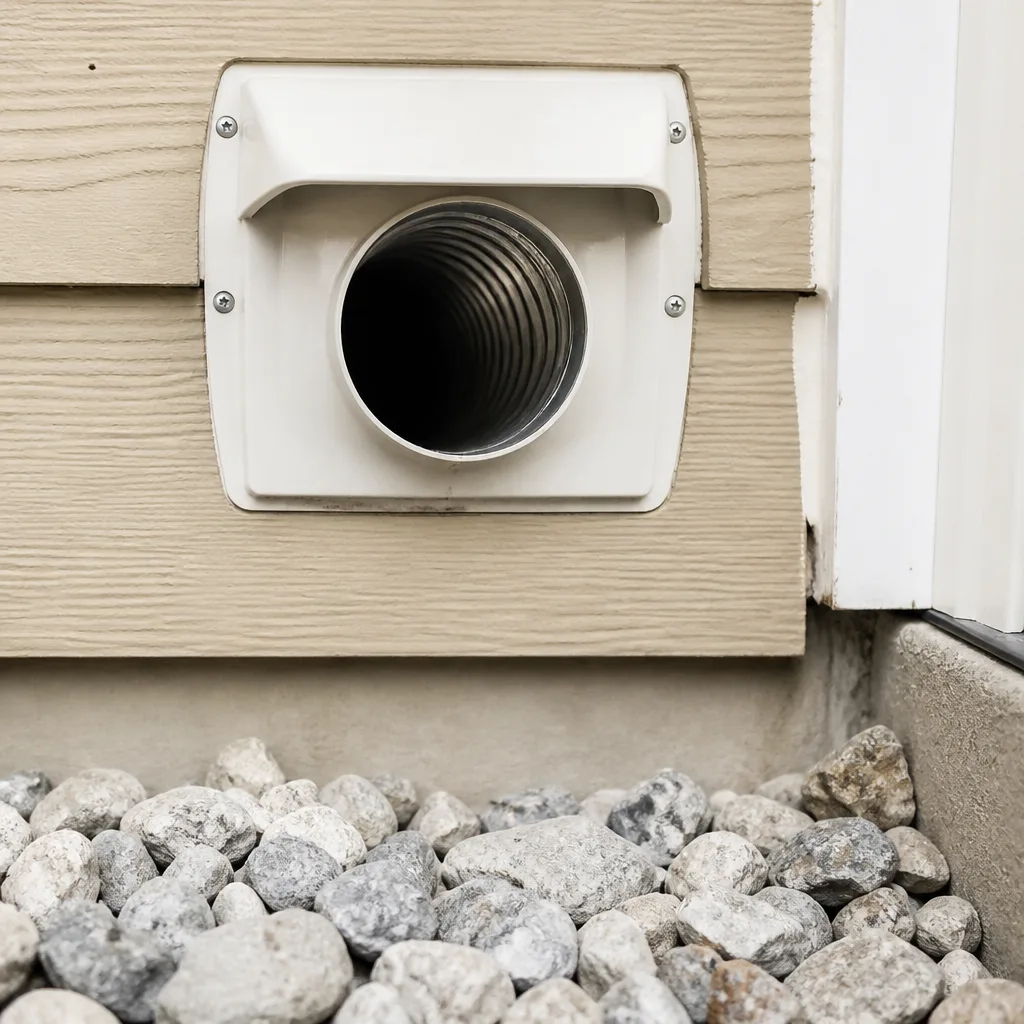 Dryer vent cleaning
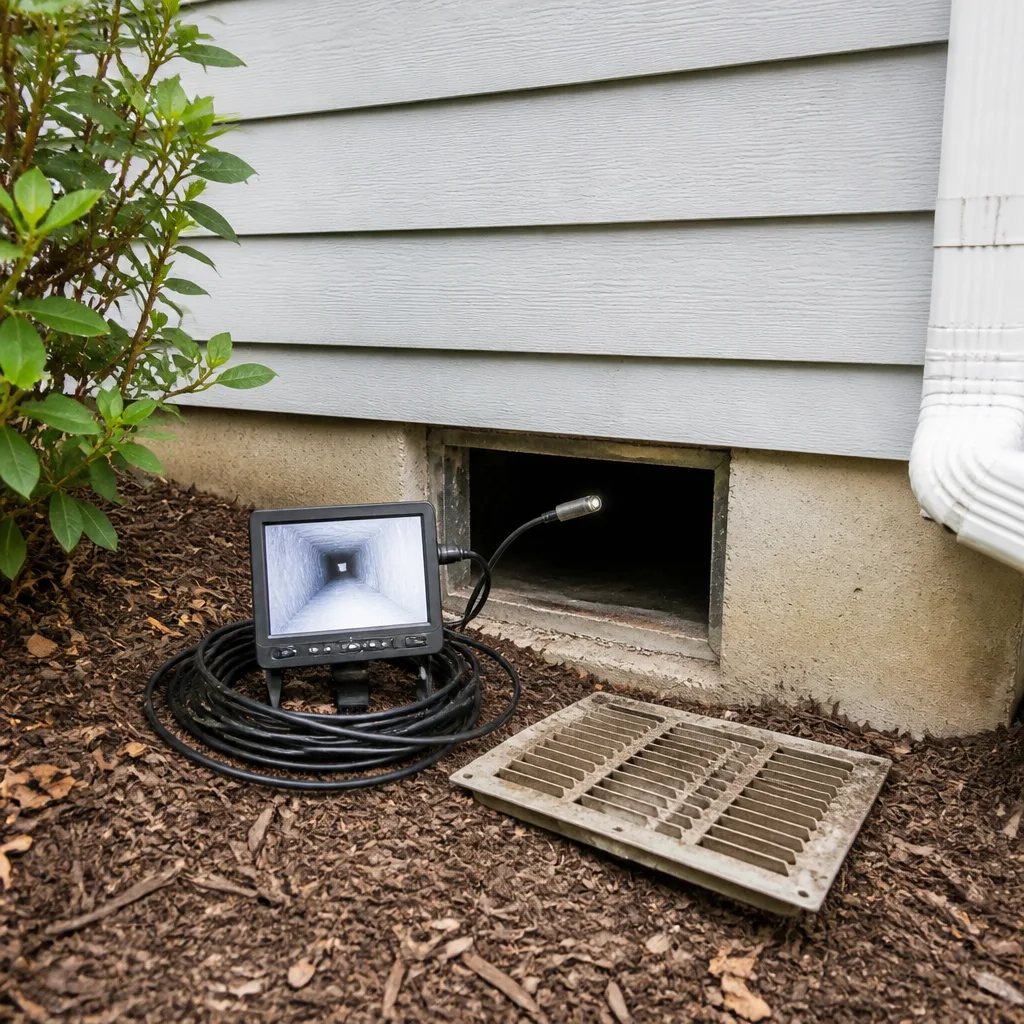 Camera inspection
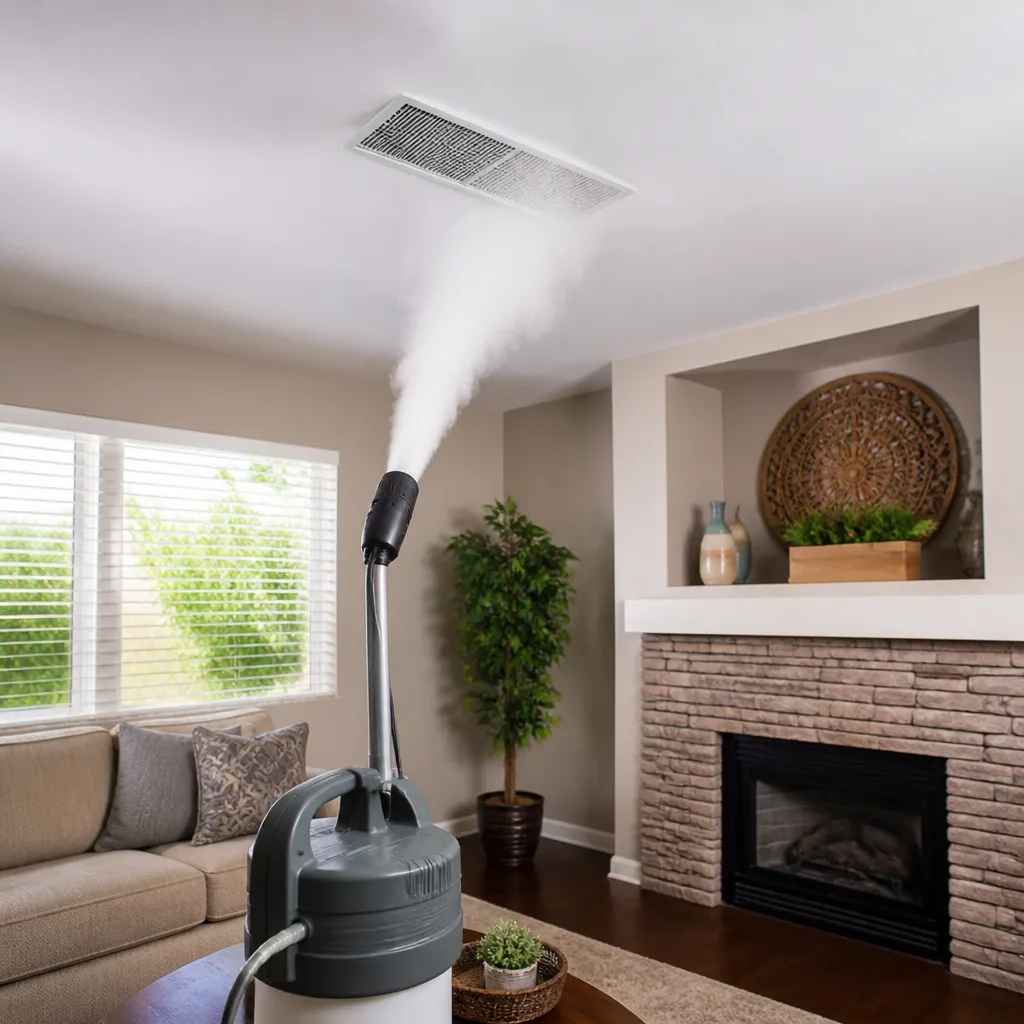 Sanitizing & deodorizing
Whole-system duct and dryer vent check with before-and-after photos - you see exactly what came out of your vents
That "$99 whole-house special" is a bait ad - the real number appears once they are in your hallway, or the "clean" is a shop-vac at the register. We photograph the inside of your ducts before and after instead.
Seasonal Air Duct Cleaning Care for Midvale: Year-Round Homeowner’s Guide
Most homeowners here treat duct cleaning as a once-a-year chore, usually in spring, sometimes whenever a coupon shows up. That calendar misses the point of living in this valley. Midvale’s four seasons don’t load your ductwork the same way. Summer wildfire smoke, fall leaf and debris infiltration, winter inversion particulates, and spring construction dust each push a different contaminant into the same system. One cleaning a year addresses one of those four loads and leaves the other three to recirculate for months.
This guide assigns a specific action to each season, so you’re responding to what’s actually in the air in Midvale rather than following a generic reminder. You’ll learn what accumulates when, which signs tell you the system is working against you, and how to set a cleaning frequency that matches your home instead of a fixed annual habit.
Quick Answer
Year-round air duct care in Midvale means matching your maintenance to each season’s contaminant load: upgrade and track filters through winter inversion season, inspect returns and sealing each spring, manage filter replacement closely during summer wildfire smoke events, and schedule a full professional cleaning in fall before the heating system starts cycling again. Fall is generally the highest-value cleaning window here, but the other three seasons each need specific attention to keep the system from redistributing what it pulls in.
Styles & brands we work with
- Whole-home duct cleaning
- Dryer vent cleaning
- Camera inspection
- Sanitizing & deodorizing
Table of Contents
- Why Midvale’s Seasons Matter More Than a Fixed Annual Calendar
- Winter: The Inversion Season Protocol
- Spring: Post-Heating-Season Inspection
- Summer: Wildfire Smoke Response
- Fall: The Highest-Value Cleaning Window
- How to Set a Cleaning Frequency That Fits Your Home
- Seasonal Action Checklist for Midvale Homes
- When to Call a Professional
Why Midvale’s Seasons Matter More Than a Fixed Annual Calendar
Midvale sits in the Salt Lake Valley, and the valley’s geography does something to the air that flat-land duct advice doesn’t account for. During winter inversions, the bowl of the valley traps particulate matter, including PM2.5, at concentrations that can climb above EPA hazard thresholds. When the furnace runs, the return ducts are pulling that trapped air through the system cycle after cycle. A cleaning schedule built for a place with steady, well-mixed air misses this entirely.
The other three seasons add their own loads. Spring brings construction dust from development around Midvale and the wider valley, plus the fine debris that settles in ducts after a full heating cycle. Summer brings wildfire smoke events that can arrive fast and linger for days. Fall brings leaf litter and the outdoor debris that finds its way into return grilles and fresh-air intakes before the heating season begins.
The point isn’t that Midvale homes are uniquely dirty. It’s that the contaminant load changes four times a year, and the maintenance should follow it. Here’s what that shift looks like compared to the once-a-year habit:
- Fixed annual cleaning: one action, usually scheduled around a convenient month, that addresses whatever happens to be in the ducts that day and ignores the three other seasonal loads.
- Seasonal care: four smaller, targeted actions across the year, plus one full professional cleaning timed to the season that matters most for your system.
- The result: less particulate recirculating during the seasons when the outdoor air is worst, and a system that’s clean going into the winter when the windows close and the furnace runs hardest.
We’ve seen both approaches in Midvale homes, and the seasonal one consistently leaves owners with a cleaner system through the months that actually stress it. The sections below break each season into what to watch and what to do.
Winter: The Inversion Season Protocol
Winter is the season most Midvale homeowners underestimate. The furnace runs nearly continuously, the windows stay shut, and the outdoor air during an inversion can be worse than the air in the house if the ductwork is filtering it properly. The system is your main line of defense and your main point of exposure at the same time. Which one it becomes depends on filter condition, return vent sealing, and whether the ducts are clean going in.
Filter Upgrade Timing
The right time to move to a higher-rated filter is late fall, before the first sustained inversion, not in the middle of one. A filter that’s already loaded can’t take on the extra particulate load that inversion season brings, and swapping to a denser filter mid-winter without checking whether your system’s blower can handle the added resistance can strain airflow. If you’re considering a higher-MERV filter or an upgraded filtration setup, do it before the heating season settles in and let a technician confirm the system can carry it. Products like Aprilaire filtration systems are built for this kind of seasonal load, and they’re worth discussing before the air gets bad rather than after.
Return Vent Inspection
Return vents pull air back into the system, and during inversion season they’re pulling the most contaminated air of the year. Check that each return grille is unobstructed, that the seal around the frame is intact, and that the filter behind it is seated correctly. A return that’s pulling air from around the frame instead of through the filter is bypassing filtration entirely, and that’s common in Midvale homes where grilles have been removed for painting or flooring work and never properly reseated.
Signs Your System Is Recirculating Trapped Particulates
Watch for these signals during an inversion, when the system should be helping and may not be:
- Dust settling on surfaces faster than usual despite regular cleaning.
- A musty or stale smell when the furnace first kicks on.
- Visible dust streaks around return grilles or supply registers.
- Increased allergy or respiratory irritation inside the home while outdoor air quality is poor.
- A filter that darkens much faster than it did in summer.
If two or more of these show up during inversion season, the ducts themselves are worth inspecting, not just the filter. Contained extraction with equipment like Abatement Technologies filtration keeps dislodged debris from redistributing through the house during the work, which matters most in exactly this season.
Spring: Post-Heating-Season Inspection
By the time spring arrives, your ducts have just finished the heaviest workload of the year. A full heating cycle pushes thousands of cubic feet of air through the system every day for months, and whatever wasn’t captured by the filter has settled somewhere in the ductwork, the plenum, or the return runs. Spring is when you find out what the winter left behind, and it’s the right time to check before cooling season starts pulling that same air back into the living space.
What Accumulates Over a Full Heating Cycle
Over a winter of continuous cycling, a few things build up predictably:
- Settled particulate: fine dust that passed the filter and dropped out of the airstream in the slower sections of duct, especially in horizontal runs and near bends.
- Filter bypass debris: dust that slipped around a poorly seated filter and collected on the blower side.
- Return-side accumulation: because returns run at lower velocity, they tend to hold more settled material than supply runs of the same length.
- Moisture-related residue: in homes with any condensation issues, the residue that forms at cooling coils and drain pans over winter.
Spring inspection is about identifying which of these is present and whether it’s severe enough to warrant a full cleaning rather than just a filter change. A visual check of accessible duct sections, the air handler, and the return plenum tells you a lot. Professional inspection with a camera adds what you can’t see from a grille.
Construction Dust Infiltration in Midvale
Midvale and the surrounding valley see steady residential construction, and construction dust is a different animal from household dust. It’s heavier, often mineral-based, and it settles in ducts and on registers during the framing and drywall phases of nearby projects, especially when windows are open in spring. If you’ve had work done on your own home or there’s active construction nearby, spring is the season to look at duct condition with extra care. Construction particulate that settles in a duct doesn’t leave on its own; it recirculates for years.
Spring Inspection Checklist
- Replace the filter and check that it’s seated correctly in the frame.
- Remove and inspect each return grille for dust buildup and seal integrity.
- Check supply registers for visible dust streaks or debris.
- Look at the air handler and blower compartment for dust accumulation.
- Confirm the condensate drain and pan are clean and draining.
- Note any musty smell or visible dust in accessible duct sections.
- Decide whether the findings warrant a full professional cleaning before cooling season.
If the checklist turns up more than a filter change can address, that’s the point to schedule a proper look rather than pushing it to fall. A spring inspection that surfaces real accumulation usually means the cleaning should happen before the air conditioner starts running, not after.
Summer: Wildfire Smoke Response
Summer in Midvale brings wildfire smoke, and smoke events are the one seasonal load where the timing of your actions matters most. Smoke particulate is fine enough to pass through standard filters and can carry odor compounds that cling to duct surfaces. The question during a smoke event isn’t whether to run the system; it’s when to run it, when to seal the house, and how often to change the filter while it’s happening.
When to Run the System During a Smoke Event
Run the system during a smoke event if the filter is clean and properly seated, because a working system with good filtration is cleaning the indoor air. If the filter is loaded or the return seals are compromised, running the system during heavy smoke can pull more particulate into the ducts than it removes from the air. Check the filter first, and if it’s near the end of its life, change it before the smoke event rather than during.
When to Seal It Instead
If outdoor air quality is at hazardous levels and your system’s filtration isn’t up to the load, closing windows, sealing gaps around exterior doors, and limiting the system to recirculation mode is the safer choice. Portable air cleaners in the main living spaces help during these periods, and they buy you time until the smoke clears. We don’t recommend opening windows to “air out” the house during a smoke event; that’s the fastest way to load the ducts with the particulate you’re trying to avoid.
Filter Replacement Frequency During Active Smoke Events
During a sustained smoke event, filters load faster than they do at any other time of year. Check the filter every couple of weeks while smoke is present and replace it when it’s visibly darkened or when airflow through the system drops. Don’t stretch a filter through a smoke event to save the cost of replacement; a loaded filter stops doing its job at exactly the moment it’s needed most. Homes with upgraded filtration systems, such as a whole-house Aprilaire setup, have more capacity to ride out a smoke event before filter change becomes urgent, but the checking frequency is the same.
After a major smoke event, if you notice persistent odor or visible dust in the ducts, a professional cleaning clears what the filter didn’t capture. That’s a judgement call, and it depends on how bad the event was and how well the system was filtered going in.
Fall: The Highest-Value Cleaning Window
Fall is the highest-value cleaning window for Midvale homeowners, and the reasoning is straightforward. You’re cleaning the system right before the season when it runs hardest and the outdoor air is worst. A duct system cleaned in September or October goes into inversion season clean, with a fresh filter and intact seals, and it has the best chance of keeping indoor air quality reasonable through the winter. A cleaning done in March or April clears what winter left behind but leaves the system loaded going into the next winter.
There’s a second reason fall matters. Fall is when outdoor debris, leaf litter, and the fine organic material that blows around the valley find their way into return grilles and fresh-air intakes. Debris that gets inside the system in fall becomes winter’s settled accumulation, and cleaning after fall rather than before means removing it once instead of letting it cycle through the heating season first.
Why Fall Cleaning Beats Spring Cleaning for Midvale
- You clean going into the season with the heaviest system use, not after it.
- Inversion season particulate meets a clean system instead of a loaded one.
- Fall debris gets removed before it can settle and cycle through winter.
- The filter you install in fall covers the entire heating season at its highest load.
- Any duct sealing you need is done before the heating system reveals leaks through energy bills.
Fall is also the right time to address duct repair and sealing if the system has shown signs of leakage during the cooling season. Sealing leaky ducts in fall means the heating season runs through intact ducts, not ducts that are losing conditioned air into the attic or crawlspace. We don’t just clean; we seal, repair, and protect, and doing that work before winter is when it pays off. If you want the full breakdown of what a professional cleaning covers, the air duct cleaning page walks through the process step by step, and it’s worth reading before you schedule.
How to Set a Cleaning Frequency That Fits Your Home
Professional air duct cleaning frequency shouldn’t be set by a fixed annual calendar. It should be set by how much contaminant your specific system is pulling in, which depends on where you live in Midvale, how old the home is, whether pets are in the house, and how well the system is filtered. The right interval is what keeps the system from becoming a recirculation source, and that varies from home to home.
Factors That Push Frequency Up
- Proximity to wildfire smoke exposure: homes that get hit by summer smoke events regularly need more frequent attention than homes that don’t.
- Active construction nearby: construction dust is heavier and settles more, and it loads the ducts faster than household dust.
- Pets in the home: pet dander and hair load filters and ducts faster than a pet-free home.
- Older ductwork with leaks: leaky ducts pull attic and crawlspace air into the system, and that air carries debris.
- Frequent filter overload: if you’re changing filters more often than the manufacturer recommends, the ducts are probably loading faster than normal.
How to Decide Your Interval
- Start with a fall cleaning as your baseline, since fall is the highest-value window in Midvale.
- Track how fast the filter loads through the winter and note whether you’re changing it more often than expected.
- Inspect returns and supply registers each spring. If they show heavy dust accumulation by spring, the interval is too long.
- If you had a significant smoke event over the summer, get the system checked before fall.
- Adjust the interval based on what you find rather than on a calendar reminder. Homes in the middle of a construction-heavy area may need twice-a-year attention; a well-filtered home in a quieter part of Midvale may do fine on an annual fall cleaning.
There’s no single right answer, and any company that quotes you a fixed schedule without asking about your home is guessing. If your system is pulling in more contaminant than your current schedule handles, the honest response is to shorten the interval, not to upsell services you don’t need.
Seasonal Action Checklist for Midvale Homes
Here’s the whole year at a glance. Use this as a quick reference and adjust based on what your specific home shows.
- Winter (inversion season): Verify filter condition before the first inversion, inspect return vents for seal integrity, watch for dust streaks and stale smells, keep windows closed and filtration running.
- Spring (post-heating inspection): Replace filter, inspect each return grille, check supply registers and air handler for dust, confirm condensate is draining, note any signs that warrant a full cleaning before cooling season.
- Summer (wildfire smoke): Check filter condition before smoke events, replace filters more often during sustained smoke, seal the house when filtration can’t handle the load, schedule a cleaning after a major event if odor or dust persists.
- Fall (highest-value cleaning window): Schedule a full professional cleaning, install a fresh filter for the heating season, address any duct repair or sealing identified during summer, clean up outdoor debris from return intakes and grilles.
If you’re not sure where your home falls on this checklist, a free estimate is the fastest way to find out. Midvale Air Duct Cleaning works through each season’s load with the same process, using Rotobrush and Nikro extraction equipment alongside Abatement Technologies filtration to contain what comes out of the system rather than redistribute it into the house.
See the difference
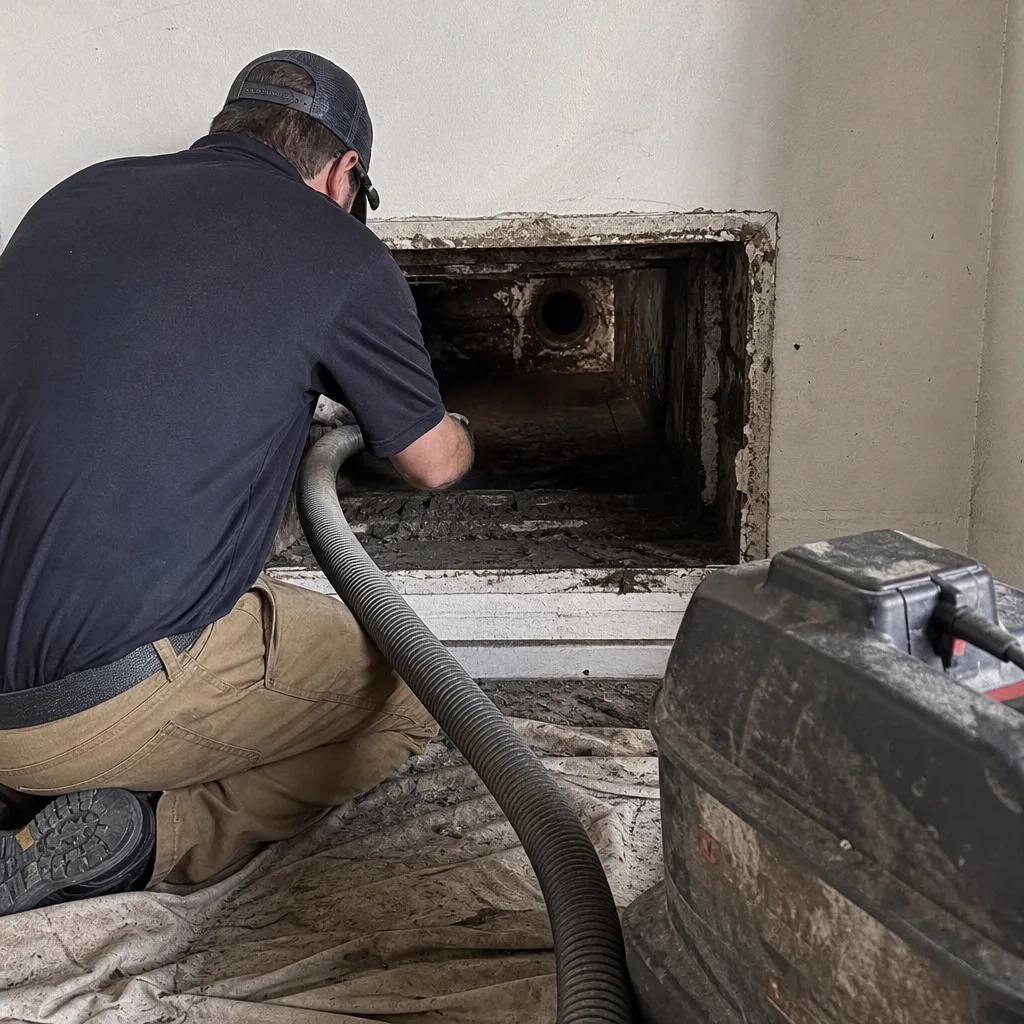 Before
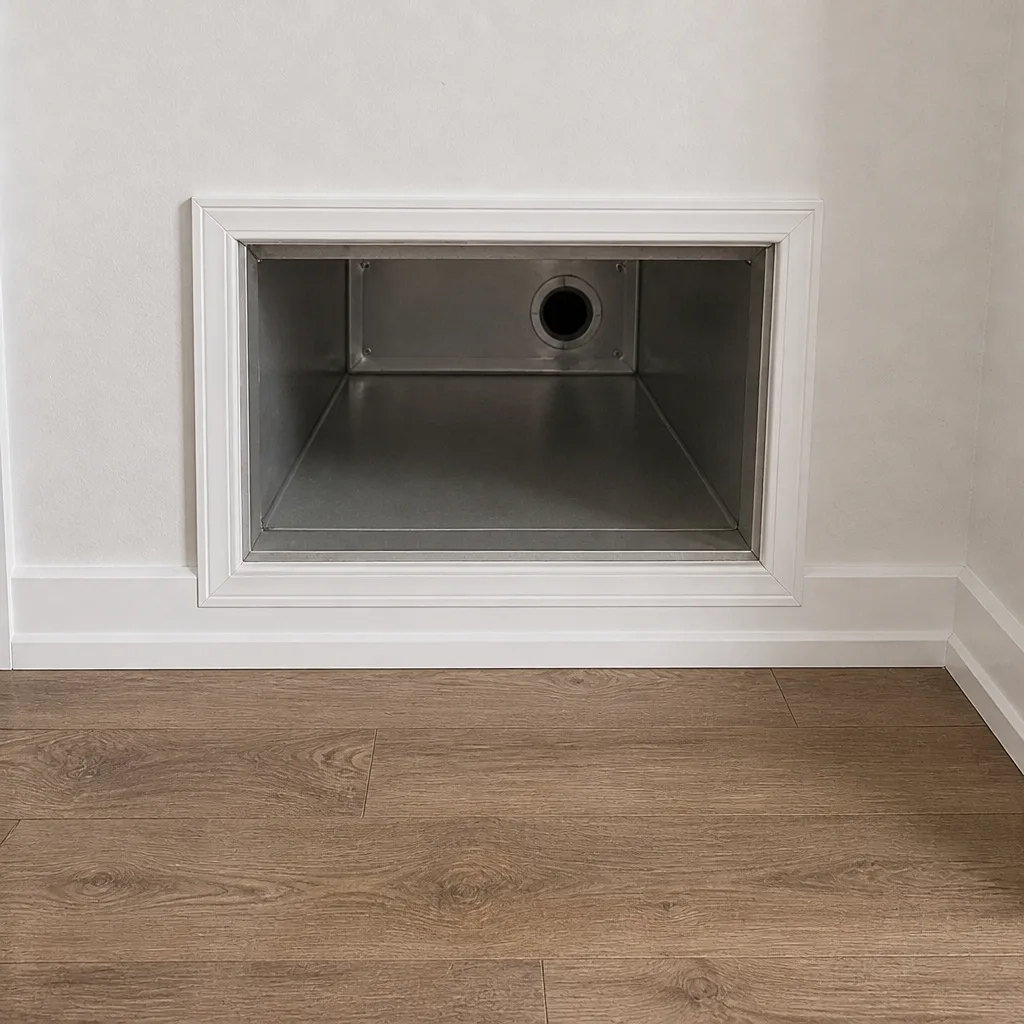 After
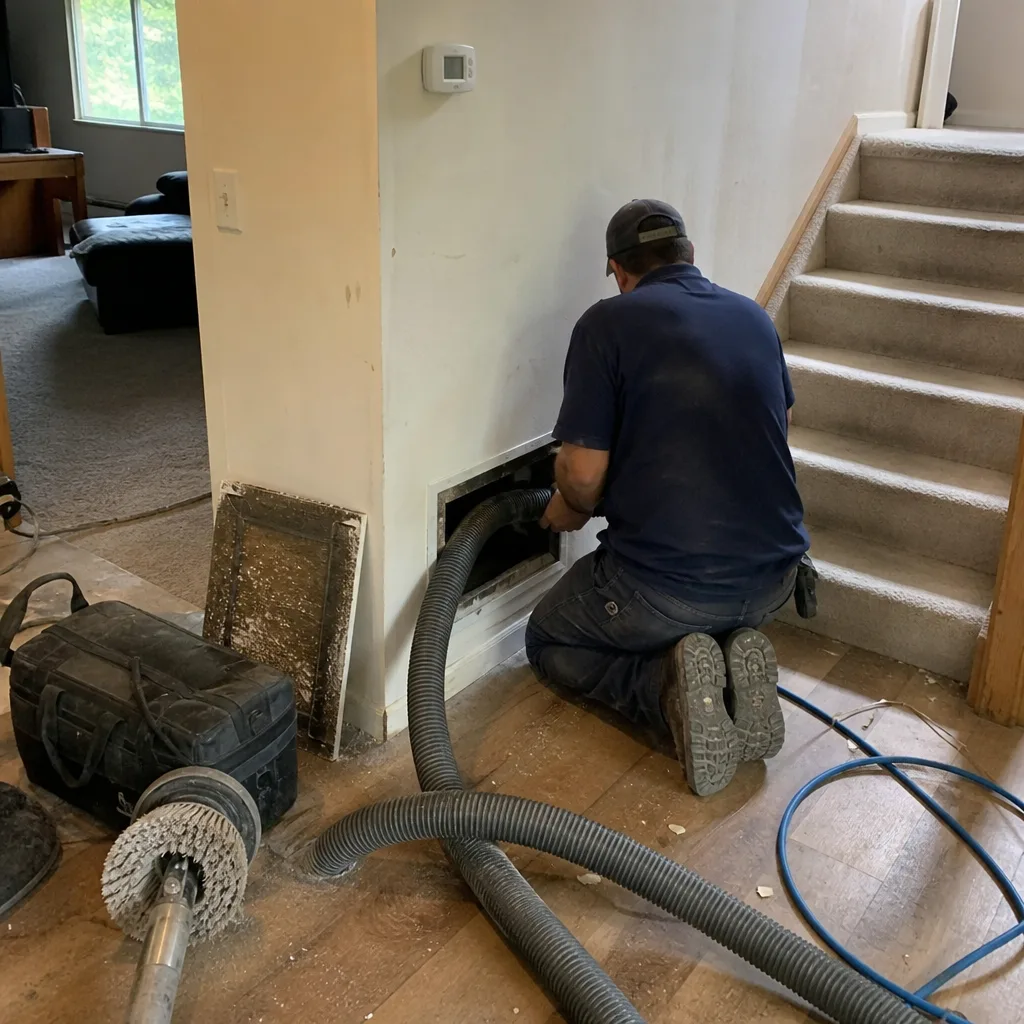 Before
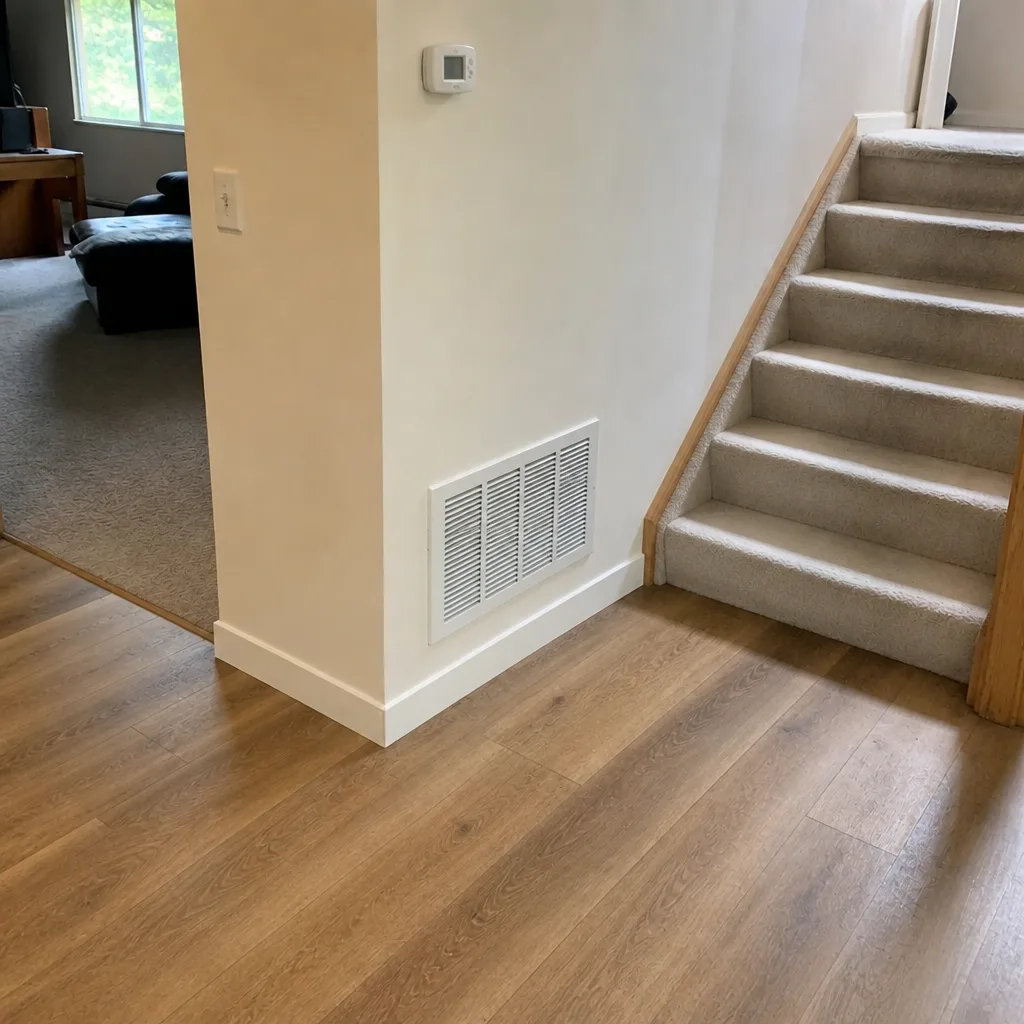 After
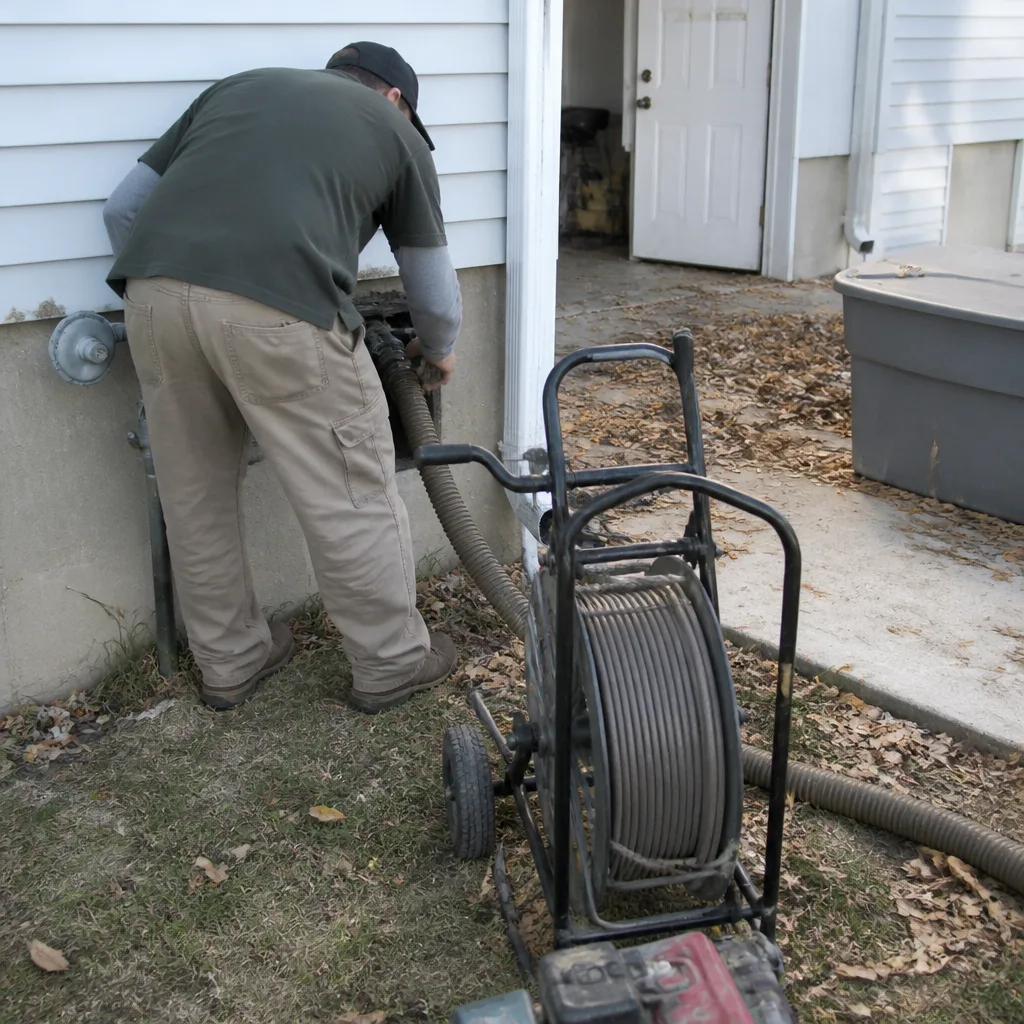 Before
 After
Common Mistakes to Avoid
- Cleaning on a fixed annual calendar instead of the seasonal load. A cleaning scheduled by convenience rather than need often happens at the wrong time. In Midvale, the wrong time means going into winter with a loaded system.
- Swapping to a higher-MERV filter mid-winter without checking airflow. A denser filter on a system that can’t carry it strains the blower and reduces airflow. Upgrade before the season, not during it, and have someone check that the system can handle the change.
- Skipping filter changes during smoke events to save cost. A loaded filter stops working exactly when smoke is worst. Replace it when it darkens, not on a fixed schedule.
- Ignoring return vent seals. Unsealed return grilles let air bypass filtration entirely, which means the ducts collect what the filter should have caught. Check the seals around each grille, especially after any home renovations.
- Letting construction dust settle and stay. If you’ve had work done or there’s construction nearby, check the ducts in spring. Construction particulate recirculates for years once it settles.
- Choosing a cleaning by coupon price alone. A low headline price often means low-powered equipment and no containment, which can redistribute debris through the house rather than remove it. Your ducts are only as clean as the process behind them.
- Skipping dryer vent cleaning as a fire-safety issue. Dryer vent cleaning isn’t just an HVAC comfort item; lint buildup is a leading cause of residential fires, and it’s easy to neglect when it’s treated as an afterthought.
When to Call a Professional
Some seasonal maintenance is within reach for most homeowners: changing filters, inspecting return grilles, sealing gaps around exterior doors. Other work should go to a professional. Call us when you see visible dust toward the far end of accessible ducts, when a musty smell returns right after a filter change, when you’ve had construction dust settle in the system, when a return vent is pulling air around its frame instead of through the filter, or when you want a full cleaning timed to the fall window before inversion season.
We also handle dryer vent cleaning as a dedicated fire-safety service, and HVAC cleaning as part of the same full-system approach. Midvale Air Duct Cleaning offers free estimates in Midvale. Call (855) 337-0937. We answer 24/7. Fast dispatch from 7am to 7pm, Sunday through Friday. Our technicians have up to 13 years of experience, and every job uses the same professional-grade equipment on every home, from the small systems in older Midvale neighborhoods to newer construction with full-house filtration.
Frequently Asked Questions
Most Midvale homes do well with a full professional cleaning in fall, timed before the heating season and inversion season, plus seasonal filter and vent checks through the rest of the year. Homes near active construction, homes with pets, and homes that regularly get summer wildfire smoke may need attention more often. The right interval depends on your specific system, which is why a free estimate is the best starting point. Call (855) 337-0937 for an exact quote. Estimates are free.
Yes, fall is generally the highest-value cleaning window in Midvale. Cleaning before the heating season means the system goes into inversion season clean, with fresh filtration and intact seals, rather than loaded with the previous year’s accumulation. Spring cleaning clears what winter left behind but leaves the system loaded going into the next winter. Call (855) 337-0937 to schedule a fall cleaning. Estimates are free.
Run it if the filter is clean and properly seated, because a working system with good filtration cleans indoor air. If the filter is loaded or the return seals are compromised, seal the house and limit the system until conditions improve. Check filters every couple of weeks during sustained smoke and replace them when they darken. Call (855) 337-0937 if you want the system checked after a smoke event. Estimates are free.
During a winter inversion, the Salt Lake Valley traps particulate matter, and your HVAC system pulls that air through the ducts every time it cycles. The ducts themselves don’t change; the load they’re asked to handle does. A clean system with good filtration handles the load far better than a loaded one. If you’re going into inversion season without having had a cleaning, call (855) 337-0937 to schedule one. Estimates are free.
Ask for before-and-after photos of your own ducts, not a generic set from the company’s files. Proper containment equipment, like Abatement Technologies filtration, keeps dislodged debris from redistributing through the house, and you should be able to see the difference in the before-and-after documentation. We use Rotobrush and Nikro extraction systems and document each job. Call (855) 337-0937 for a free estimate.
Cheap quotes often reflect low-powered equipment like shop-vac setups rather than commercial-grade rotary brush systems, and they usually skip containment during service. That means debris can redistribute through the house rather than be extracted. Your ducts are only as clean as the process behind them, and the process is what the price reflects. We quote one flat price per system, agreed before work starts. Call (855) 337-0937 for a free estimate.
The Bottom Line
Midvale’s four seasons each put a different contaminant into your duct system, and a once-a-year cleaning only addresses one of them. Winter inversion season rewards a clean system with good filtration. Spring inspection catches what the heating cycle left behind. Summer smoke events need filter attention and containment. Fall is the highest-value cleaning window, because it’s the only season where a cleaning pays off for the season that follows. Set your frequency based on how your home loads, not on a fixed calendar, and have the system checked when the seasonal signs point to more than a filter change can handle. If you want a free estimate on where your system stands, call (855) 337-0937. We answer 24/7. Fast dispatch from 7am to 7pm, Sunday through Friday.
Written by the team at Midvale Air Duct Cleaning.